Using the Gottman Method to Improve Friendship in Marriage
Marriages that go the distance rarely run on grand gestures. What keeps them steady is friendship, the ordinary warmth of two people who like and trust each other. In my office, I watch couples arrive convinced they have a communication problem. We usually discover they have a friendship problem. The Gottman method puts friendship at the center of marital health, not as a soft add-on but as the engine that powers resilience, attraction, and teamwork. Friendship is where everyday bids for connection land, where humor disarms conflict, where stress feels shared rather than isolating. It is also the easiest part to neglect when careers, children, or health challenges tighten the schedule.
This article outlines how the Gottman method builds friendship into daily life and conflict repair, how it blends with other approaches like EFT for couples, and how to tailor it for neurodiversity, including ADHD. I will also describe what happens inside structured formats such as couples intensives, because sometimes the right container matters as much as the right tools.
What the Gottman method means by friendship
John and Julie Gottman’s research, spanning thousands of couples across decades, identified stable, predictive markers of relationship health. The so-called Sound Relationship House model gives friendship a prominent foundation. Four friendship muscles matter most in day to day life.
Love Maps describe how well you know your partner’s inner world. This goes far beyond favorite movies. It means knowing who is stressing them at work, which friend they miss, what they hope happens this year, what keeps them awake at 2 a.m. Strong Love Maps make it easier to be on the same team because you can anticipate and respond to each other’s needs without a script.
Fondness and Admiration is the habit of appreciating your partner out loud. It sounds small, but married life drifts toward fixating on micro-irritations unless actively countered by gratitude. Catching your partner doing something right does not deny problems, it gives you leverage to solve them.
Turning Toward refers to the way we react to bids for connection. Bids can be tiny. A comment about a funny dog video, a sigh in the kitchen, a hand on your shoulder in bed. Healthy couples notice and turn toward, even with micro-responses like a smile or “tell me more.” Over time, these tiny deposits build trust that your partner is there.
Positive Perspective is the overall sense that your partner is on your side, even when they mess up. It is not toxic positivity. It is a realistic buffer that grows when the first three habits are practiced, leading to more generous interpretations and quicker repairs.
Friendship is not a separate box next to sexual intimacy or conflict management. It weaves through both. A deep Love Map makes affection feel specific. Fondness primes a forgiving nervous system during arguments. Turning Toward creates the raw material for desire, especially under the long pressures of parenting or travel-heavy work.
A day in the life of friendship
Consider two couples, both married twelve years, both raising kids under ten. In one home, breakfast is a frantic choreography. The coffee is made, but a comment about a late meeting goes unheard. A child’s meltdown swallows the final five minutes. They part with a rushed kiss and a task list. In the other home, the tempo looks similar, but there is a two minute ritual that does not get skipped. Phones stay on the counter. One partner asks, “What’s one thing on your plate today you want me to check in about?” The other gives a headline. They make eye contact, say one encouragement, then return to the scramble. At dinner that night, the first couple argues about dishes. The second couple, also tired and cranky, ends up laughing halfway through the same argument because a thread of connection, anchored that morning, holds.
The point is not to compare moral fiber. It is to notice that friendship lives inside micro-moments that are easy to overlook and easy to design. When couples come to couples therapy, our first wins often come from building small, non-negotiable rituals that accumulate into trust.
Love Maps that do real work
Standard Love Map exercises include questions like, “Name your partner’s best friend,” or “What is your partner’s secret dream?” Those are wonderful, yet the most useful Love Map questions are timely, not generic. The question that helps your partner today might be, “Which email are you dreading most?” or “If you had an extra hour alone tonight, what would you do with it?” These invite specifics you can later reference, creating a felt sense that you are paying attention.
In practice, I ask couples to track three ongoing files on each other: current stressors, current delights, and current supports. Stressors are the pressure points that raise reactivity. Delights are the small joys that reset the nervous system. Supports are the people and practices that expand capacity. If you know your partner’s stressors, you can calibrate how you bring up a contentious topic. If you know their delights, you can engineer a five minute morale boost. If you know their supports, you avoid cutting them off from the very resources that make them more available to you.
A common edge case here is when one partner feels interrogated. “Stop treating me like a client,” I once heard. The fix is tone and pacing. Curiosity becomes friendship only when it comes with warmth and permission to pass. If your partner says, “I don’t want to talk,” the turn toward shifts to “Okay, I’m here when you do.” That still builds friendship, because it respects autonomy.
Fondness that does not feel like a performance review
Praise can land flat if it sounds like a corporate memo. The more grounded the observation, the more it nourishes. Instead of “You’re amazing with the kids,” try, “When you got on the floor and let them climb on you after your long commute, I felt relief wash through me.” Notice the behavior, the impact on you, and the meaning you make of it. Aim for brief and honest, not flowery.
If one partner struggles to articulate appreciation, it is rarely due to a lack of love. It is often a language problem learned in families that equated praise with weakness, or a neurodiversity challenge that makes internal states harder to translate. In ADHD therapy with couples, I sometimes teach appreciation scaffolds, like a two sentence structure. Sentence one describes a concrete behavior within the past 48 hours. Sentence two names how it helped or what it meant. This time frame matters because the ADHD brain retains highlights and crises, not the middle scenes. When appreciation attaches to fresh events, it becomes easier and more convincing.
Also, spread appreciation across domains. Admire competence, yes, but also admire character. Notice humor, creativity, grit, tenderness, restraint. A pattern of admiration builds attraction, including sexual interest, because it lights up the why of your bond, not just the logistics of running a household.
Turning Toward in the wild
Turning Toward is simple to teach and harder to live at speed. Partners send dozens of bids a day. Some are verbal, many are not. A quick glance up from a screen when your partner speaks is a turn toward. So is, “One sec, let me finish this paragraph so I can give you my eyes.” I encourage couples to track their ratio for a week. Not to self-shame, but to quantify a habit. If one partner estimates they turn toward 70 percent of the time and the other reports it feels like 20, we have a calibration issue, not a moral failure. This gap often closes when micro-responses get more visible. A nod, an “mm-hmm,” or a touch on the arm counts. Silent friendliness counts. The goal is not perfect responsiveness, it is frequent, reliable friendliness.
Phone use is the obvious enemy here. If I had to choose one behavior to protect friendship in 2026, it would be face-to-face conversation without devices in hand for at least 20 minutes a day. Many couples hear this as a luxury. It becomes a keystone habit when choreographed. Put chargers outside the bedroom. Agree on a screen curfew. Designate the first 10 minutes after reuniting as phone-free. These are not moral stances, they are design choices to make organic Turning Toward more likely.
Repair attempts that sound like you
Gottman research shows stable couples use frequent, low-drama repairs during conflict. A repair attempt is any statement or gesture that interrupts escalation and returns the conversation to collaboration. “Can we start over?” “I’m getting flooded, can we pause for five minutes?” “I’m sorry, I said that harshly.” The content matters less than the tone, which should be light, sincere, and specific.
The best repairs are rehearsed in calm moments and tailored to your voice. I ask couples to co-create a menu of three repairs each that feel natural. One husband I worked with was a musician and used, “Can we change key for a second?” It made his wife smile, and the humor softened the spike of adrenaline. Another couple used a physical repair, tapping two fingers on the table as a signal to take a breath. Think of repair as the lifeline you throw yourself, not a weapon to win the argument. If your partner uses a repair, reward it by shifting your stance, even if you still disagree on the topic. This builds the positive perspective that makes future repairs more effective.
Do repair attempts always work? No. When one or both partners are physiologically flooded, the prefrontal cortex goes offline. Heart rates spike above roughly 95 to 100 beats per minute for many people, though the threshold varies. Logic and empathy shrink. In those moments, the wisest repair is space. Step away for at least 20 minutes, up to an hour, do something that lowers arousal, then return on time. If one partner repeatedly does not return, that becomes the new problem to solve, because reliability is the backbone of safety.
Friendship and intimacy, not either or
Some couples worry that emphasizing friendship turns marriage into a roommate arrangement. This misses the way desire operates over time. Early-stage sexual chemistry thrives on novelty and uncertainty. Long-term desire thrives on feeling cherished and seen. Friendship feeds the latter by keeping you two current with each other’s inner lives. When you share fresh admiration, desire has something to hook onto. When you turn toward bids for connection, sexual overtures feel less risky. When you handle conflict with timely repairs, resentment does not block libido.
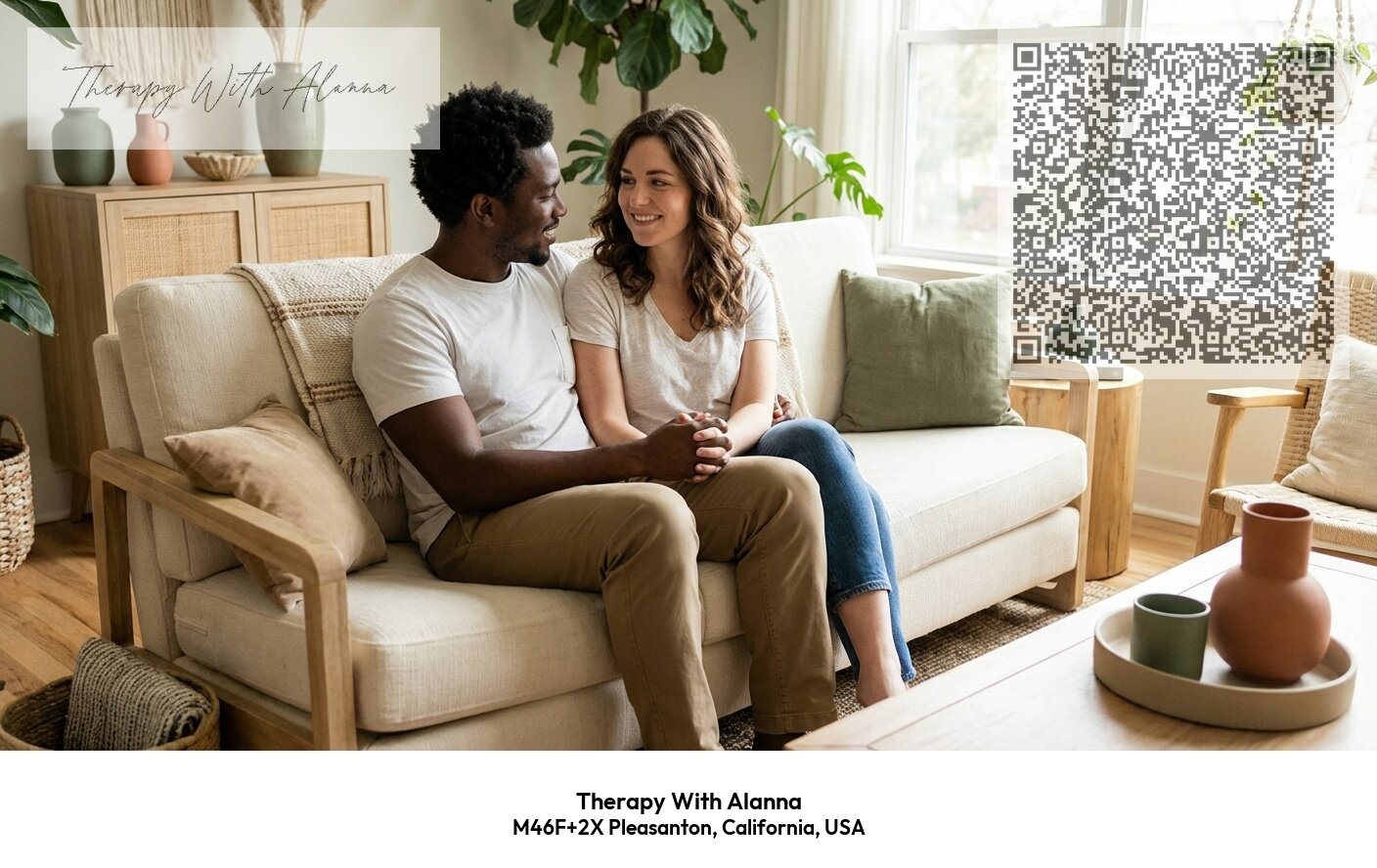
For couples who feel sexually disconnected, I often ask them to suspend pressure for a set period and invest in two practices: daily micro-connection and a weekly date that specifically revisits playfulness, not logistics. I also collaborate with sex therapists when medical or trauma histories require domain expertise. Friendship without embodied pleasure can flatten into a sibling vibe. Embodied pleasure without friendship often collapses under stress. The sweet spot uses both, adjusted for each couple’s values and bodies.
Integrating EFT for couples to deepen friendship
Emotionally Focused Therapy, or EFT for couples, focuses on the attachment bond. Where the Gottman method offers rich behavioral scaffolding, EFT slows conflict in the room to reach the raw fear underneath, the “Do I matter to you?” or “Are you there for me?” that fuels protest or stonewalling. I find the methods complement each other. Gottman tools give couples tasks for home, EFT sessions deepen the safety that makes those tasks stick.
For example, during an EFT session with a couple stuck in a pursue-withdraw pattern, we might slow a criticism into the softer longing beneath it. “When you turn away while I am talking, I feel invisible, and my chest tightens.” The partner hears not just the complaint but the loneliness. We then pair that insight with a Gottman practice, like a daily stress-reducing conversation where the withdrawer commits to 10 minutes of eye contact and reflection. The behavioral practice now ties to an attachment need, making it more motivating and tender.
ADHD, executive function, and the friendship toolkit
Neurodiverse couples, including those navigating ADHD, benefit from explicit structure. The ADHD brain wrestles with time blindness, working memory gaps, and distractibility. When a partner with ADHD forgets a plan or misses a cue, the non-ADHD partner often reads it as a lack of care rather than a neurobiological glitch. Friendship suffers.
In ADHD therapy, I help couples translate Gottman habits into visible routines. Love Maps become whiteboard notes that hold current stressors and delights, updated on Sundays. Turning Toward gets a shared code phrase that pierces hyperfocus, like “pause for me.” Fondness becomes a daily 30 second voice memo that the ADHD partner can record while walking the dog. Repair attempts get linked to physical anchors, like a bracelet they touch when overwhelmed.
Medication and coaching can widen the window of presence, but tools still matter. Use alarms for reunions. Put a notepad in the kitchen to capture bids that arrive mid-task. Break promises into micro-commitments with time and context. “I will order the birthday present at 8 p.m. Tonight while sitting at the dining table” is more reliable than “I’ll take care of it.” Reliability, even on small items, is the friendliest love language you can speak in a neurodiverse marriage.
One caveat. The non-ADHD partner should not become a parent or a project manager as their default role. That dynamic corrodes attraction and breeds resentment. Share the job of designing scaffolds. Rotate which partner sets the weekly agenda. Celebrate when systems work, then expect them to need tweaks. The goal is mutual dignity, not compliance.
A weekly friendship meeting that couples actually use
Scheduling love sounds unromantic until you remember how much of married life is scheduled anyway. A short, structured check-in prevents drifting resentments and keeps the story of your week co-authored. Try this 25 to 35 minute meeting, ideally on the same day each week.
- Highs and lows of the week, two minutes each, no problem-solving.
- Calendar and logistics for the next seven days, including who needs support when.
- Appreciation round, one specific thing each, within the past 48 hours.
- One small improvement for the home team, agree on a concrete, measurable tweak.
The meeting should feel brisk and friendly, like a huddle before a game. If it slides into a budget negotiation every time, cordon off money for its own meeting. If it morphs into therapy, you may need outside help to contain heavier topics. Do not underestimate the power of a five minute appreciation round. If you do nothing else, do that.
The stress-reducing conversation, with real-world examples
Gottman’s stress-reducing conversation is a daily or near-daily check-in about external stress. The key rule is that the listener does not fix. They listen to help their partner metabolize stress so it does not leak into the relationship. Simple reflections are the backbone. “That makes sense.” “I can see why that got to you.” Pair that with curiosity about feelings, not facts. “What part of that stung most?” and “Where do you feel that in your body?” are better than “So what did you tell your boss?”
In practice, couples bump into predictable snags. The fixer cannot help offering solutions. The storyteller rehashes for 45 minutes. The tired partner cannot muster empathy after 10 p.m. Solve these with boundaries. Set a timer for 10 to 15 minutes, then switch roles. Hold a small object when you are the speaker so you do not interrupt. If the fixer slips in a solution, the speaker says, “Listening hat,” as a cue to course-correct. If fatigue kills empathy, move the conversation earlier or shorter. Friendship thrives when the ritual exists more days than it does not, not when it runs perfectly.
Using conflict to strengthen rather than erode friendship
Gottman’s research distinguishes solvable problems from perpetual ones. About two thirds of marital conflicts fall into the perpetual category, often rooted in personality differences and core values. You do not banish these, you learn to dance with them. Friendship makes this dance possible because it tones down the contempt and defensiveness that poison repeated conversations.
When a couple circles the same topic for years, I use a Gottman-inspired grid: dreams within conflict. Each partner gets time to describe the value or fear underneath their position. “Why does this matter to you?” We look for non-negotiables and flex points. My job is to slow the conversation until we hear the nobility in both stances. A couple fighting about holiday travel realized one partner’s push to visit family every year was about being a good daughter in a culture where family loyalty is sacred. The other partner’s resistance came from childhood memories of chaotic, aggressive gatherings. The solution was not a neat compromise, it was a creative plan that honored both: alternating years, booking a nearby rental to have retreat space, and scheduling a private debrief walk each day.
If contempt shows up, I do not let it slide. Contempt kills friendship faster than any other horseman. We pause and rebuild the fondness and admiration bank before returning to the issue. Sometimes we abandon the issue for the day. That is not avoidance, it is repair.
When to consider couples intensives
Weekly therapy is the right cadence for many, but some couples benefit from a deeper immersion. Couples intensives compress months of work into two or three days. The reasons vary.
- You are stuck in a repeating fight that inflames quickly, and weekly sessions never get beneath it.
- You are recovering from a breach of trust, such as an affair, and need a strong container to stabilize.
- Schedules make weekly work impossible, for example, rotating shifts or frequent travel.
- You want to jump-start stalled progress, then return to a weekly pace with momentum.
In a well-designed intensive, you complete assessments ahead of time, often including the Gottman Relationship Checkup. In the room, you practice core skills repeatedly. You map the cycle of your fights with surgical detail, not to assign blame but to find leverage points. You design rituals of connection that you can sustain later. Many intensives integrate the Gottman method with EFT for couples, allowing you to learn skills in the morning and experience deeper bonding in the afternoon. Afterward, a clear aftercare plan matters. Intensive highs fade without ongoing structure, so schedule follow-ups, protect your weekly friendship meeting, and renew the practices that felt most alive.
Choose intensives with experienced clinicians who can handle both skill-building and emotional depth. Ask how they manage safety, what a typical day looks like, and how they tailor for neurodiversity or trauma histories. If domestic violence or coercive control is present, an intensive is not appropriate. Safety must come first, and individual therapy or specialized services may be needed before or instead of couples work.
Cultural, family, and life-stage realities
Friendship does not look the same in every marriage. Cultural norms shape how affection and loyalty are expressed. In some families, public displays of fondness feel disrespectful, in others they feel essential. Some couples prioritize extended family obligations, others draw firmer boundaries. The Gottman method is flexible enough to honor these differences while still insisting on core ingredients like kindness and reliability.
Life stage matters too. New parents often feel their friendship disappear under sleep deprivation. I encourage them to lower the bar for rituals. Ten seconds of appreciation in the baby’s room counts. A three minute shared song during bath time counts. Empty nesters sometimes find they have parallel lives. Friendship can be rebuilt with curiosity about who your partner is now, not who they were at 30. Ask about emerging interests, not just shared history. Try small experiments, like a class or volunteer shift together, long enough to get past the awkward beginning.
Illness, caretaking, and grief will test any marriage. In those seasons, friendship is measured less by banter and more by presence. The Gottman practices still apply, they just slow down. Repair attempts sound like reaching for a hand on the hospital bed. Fondness is the quiet thank you after a hard appointment. Turning Toward is reading the room and fetching water without being asked.
Measuring progress without turning your love into a spreadsheet
Couples often ask how they will know friendship is improving. You can track felt shifts. Do you laugh more often, even briefly. Do arguments recover faster, even if the topics remain. Are spontaneous touches returning. Do you know more about your partner’s week without effort. If you like numbers, you can measure the frequency of friendship rituals. How many days did you complete the stress-reducing conversation. How many appreciations did you say out loud this week. Gottman’s 5 to 1 ratio for positive to negative interactions is a useful North Star during non-conflict times. You do not need to tally every smile, but you can notice when the emotional climate feels mostly warm.
If you stall, resist the urge to add six more practices. More is not always better. Double down on one ritual that felt doable. If you cannot sustain even one, consider whether an unaddressed issue is siphoning energy, such as untreated depression, alcohol misuse, or unresolved trauma. Friendship thrives in stable soil. Sometimes individual therapy, a medical evaluation, or a medication adjustment is the intervention that unlocks relational change.
Bringing it all home
Friendship in marriage is not a personality trait or a chemistry accident. It is a set of choices, repeated until they feel like a shared language. The Gottman method offers a tangible grammar for that language. Learn each other’s inner worlds with fresh, specific questions. Speak admiration in plain, grounded words. Turn toward bids with micro-responses that add up. Repair early and often, using phrases that fit your voice. Borrow EFT for couples to reach the soft spots under your reactivity. Adapt for neurodiversity with visible scaffolds that protect dignity. When needed, choose formats like couples intensives to accelerate and consolidate change.
I have watched couples who felt like strangers become teammates again. Not by solving every difference, but by choosing friendliness in 10,000 moments. Your version will have its own texture and constraints. That is good. Friendship does not copy, it customizes. Start with one ritual. Hold to it for a month. Pay attention to small mood shifts. Add another when it feels natural. If you get stuck, that does not mean you are incompatible, it may mean you are under-resourced or mis-specified. Adjust, seek help, and keep https://andresgwho176.almoheet-travel.com/getting-started-with-couples-therapy-a-beginner-s-guide-for-busy-partners the goal in sight. Not perfection, not constant harmony. Just a marriage where two people like each other, show it, and trust that even hard chapters can be faced side by side.
Therapy With Alanna NAP
Name: Therapy With AlannaAddress: 74 Neal St Suite 201, Pleasanton, CA 94566
Phone: +1 350-249-2911
Website: https://therapywithalanna.com/
Email: [email protected]
Hours:
Sunday: 9:00 AM–5:00 PM
Monday: 9:00 AM–7:00 PM
Tuesday: Closed
Wednesday: Closed
Thursday: 9:00 AM–8:00 PM
Friday: 12:00 PM–9:00 PM
Saturday: Closed
Open-location code: M46F+2X Pleasanton, California, USA
Latitude/Longitude: 37.6601033, -121.8750829
Map/listing URL: https://www.google.com/maps/place/Therapy+With+Alanna/@37.6601033,-121.8750829,685m/data=!3m2!1e3!4b1!4m6!3m5!1s0x42234c33c2acfbcf:0x10503be7a528c289!8m2!3d37.6601033!4d-121.8750829!16s%2Fg%2F11wv78n_c5
Embed iframe:
Socials:
Facebook: https://www.facebook.com/profile.php?id=61585072978215
Instagram: https://www.instagram.com/therapywith_alanna/
LinkedIn: https://www.linkedin.com/company/therapy-with-alanna
TikTok: https://www.tiktok.com/@therapywithalanna
YouTube: https://www.youtube.com/@TherapywithAlanna
Therapy With Alanna is a Pleasanton, CA counseling practice offering relationship-focused support for couples and individuals, with in-person sessions locally and telehealth options across California.
Alanna Esquejo, LMFT, works with partners navigating communication strain, recurring conflict, neurodivergent relationship dynamics, affair recovery, and relationship repair.
The practice is based near Downtown Pleasanton and serves clients from Pleasanton, Dublin, Livermore, San Ramon, Danville, and nearby East Bay communities.
Therapy With Alanna may be a helpful fit for couples who want structured, compassionate conversations about patterns that keep repeating in their relationship.
In-person appointments are available in Pleasanton, while online therapy options are available for clients located in California.
The practice lists a direct phone line and email for consultation requests, making it easier for prospective clients to ask about availability before scheduling.
To contact Therapy With Alanna, call +1 350-249-2911 or visit https://therapywithalanna.com/.
The public map listing places Therapy With Alanna at 74 Neal St Suite 201 in Pleasanton; the website footer also references Suite #202, so clients should confirm the exact suite before visiting.
Clients visiting from the Tri-Valley can use the map listing for directions to the Pleasanton office near Main Street, W Neal Street, the Pleasanton Library, and Museum on Main.
Popular Questions About Therapy With Alanna
What does Therapy With Alanna offer?
Therapy With Alanna offers relationship-focused therapy for couples and individuals, including support for communication challenges, recurring conflict, neurodivergent relationship patterns, affair recovery, and relationship repair.
Where is Therapy With Alanna located?
The public local listing places Therapy With Alanna at 74 Neal St Suite 201, Pleasanton, CA 94566. The official website footer also shows Suite #202 in some locations, so clients should confirm the suite before visiting.
Does Therapy With Alanna offer online therapy?
Yes. Therapy With Alanna lists in-person sessions in Pleasanton and online therapy options for clients located in California.
Who does Therapy With Alanna serve?
The practice serves couples and individuals, including clients from Pleasanton, Dublin, Livermore, San Ramon, Danville, the greater East Bay, and clients using telehealth throughout California.
What are the listed hours for Therapy With Alanna?
The public listing shows Sunday 9:00 AM–5:00 PM, Monday 9:00 AM–7:00 PM, Tuesday closed, Wednesday closed, Thursday 9:00 AM–8:00 PM, Friday 12:00 PM–9:00 PM, and Saturday closed. Hours can change, so confirm availability before visiting.
Is Therapy With Alanna a crisis service?
No. Website content is informational and does not replace emergency or crisis care. In an emergency, call 911 or go to the nearest emergency room.
How can I contact Therapy With Alanna?
Call +1 350-249-2911, email [email protected], or visit https://therapywithalanna.com/. Social profiles include Instagram, Facebook, LinkedIn, TikTok, and YouTube.
Landmarks Near Pleasanton, CA
Downtown Pleasanton — A practical reference point for clients visiting the Therapy With Alanna office near the local downtown corridor.
Main Street — A major nearby street for navigating to appointments, local parking, and nearby restaurants before or after a visit.
W Neal Street — The office is listed on Neal Street, making this one of the most useful local orientation points.
Pleasanton Library — A nearby civic landmark that can help clients recognize the area around the office.
Museum on Main — A Downtown Pleasanton landmark near the office area and useful for local directions.
Meadowlark Dairy — A recognizable Pleasanton stop near the downtown area for clients using local landmarks to navigate.
Pleasanton Post Office — A nearby landmark and parking reference for visitors coming into Downtown Pleasanton.
Bernal Avenue — A key route mentioned for visitors approaching Downtown Pleasanton from the I-680 corridor.
Santa Rita Road — A major Pleasanton route that can help clients coming from the I-580 corridor reach the downtown area.
Dublin — Therapy With Alanna serves nearby Tri-Valley clients from Dublin who are seeking in-person care in Pleasanton or online care in California.
Livermore — Clients from Livermore can use the Pleasanton office location for in-person sessions or inquire about California telehealth availability.
San Ramon — The practice lists San Ramon within its broader East Bay service area for relationship-focused therapy support.
Danville — Danville clients can contact Therapy With Alanna to ask about Pleasanton appointments or California online therapy options.